

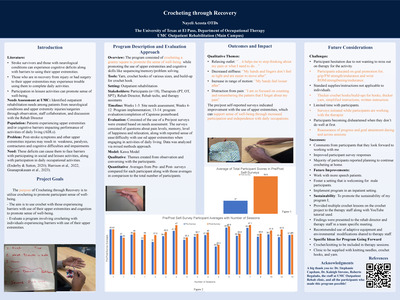
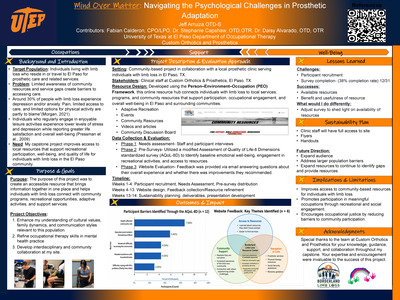
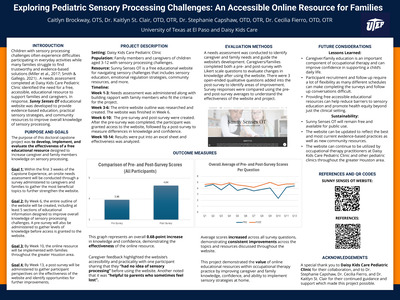
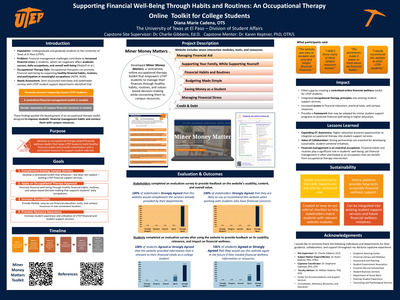
-
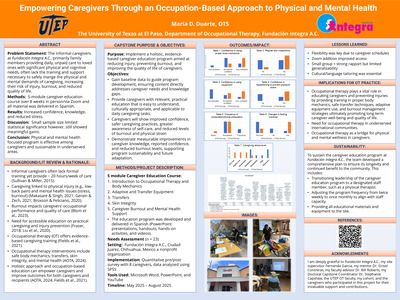
Empowering Caregivers Through an Occupation-Based Approach to Physical and Mental Health
Maria Duarte
Problem Statement: The informal caregivers at Fundación Integra A.C., primarily family members providing daily, unpaid care to loved ones with significant physical and cognitive needs, often lack the training and support necessary to safely mange the physical and mental demands of caregiving, increasing their risk of injury, burnout, and reduced quality of life.
Methods: 5-module caregiver education course over 8 weeks in person/via Zoom and all material was delivered in Spanish.
Results: Increased confidence, knowledge, and reduced stress.
Discussion: Small sample size, limited statistical significance however, still showed meaningful gains.
Conclusion: Physical and mental health focused program is effective among caregivers and sustainable in underserved areas.
-
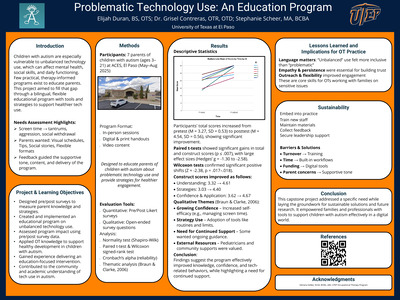
Problematic Technology Use: An Education Program
Elijah Duran
There is a growing body of research on problematic technology use and its impact on children with autism. Studies have shown that excessive or unbalanced use of technology may contribute to challenges in mental health and social functioning for this population (Ang et al., 2018; Cerniglia et al., 2017; Ezeh et al., 2021; Hoge et al., 2017; Kawabe et al., 2016; Small et al., 2020; Yucelyigit & Aral, 2018). However, there is limited research on how this issue is being practically addressed. Children with autism, who are already at higher risk for developing problematic behaviors with technology (Normand et al., 2022; Young & Abreu, 2017), along with their parents, can benefit from increased awareness and access to strategies that support healthy technology use. Currently, there is a gap in the literature regarding occupational therapy-based educational programs designed to address this issue in this vulnerable population
The primary purpose of this project is to educate parents of children with autism, and their children, about problematic technology use and to provide practical strategies for promoting healthier, more balanced use. By raising awareness and offering actionable tools, the project aims to support the mental health and social well-being of this vulnerable population by educating their parents. Ultimately, the goal is to empower families with resources that help protect and enhance the quality of life for children with autism. In addition, this project may serve as a foundation for future research into effective educational interventions targeting problematic technology use in this population, helping to expand the support available to families facing similar challenges.
-
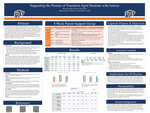
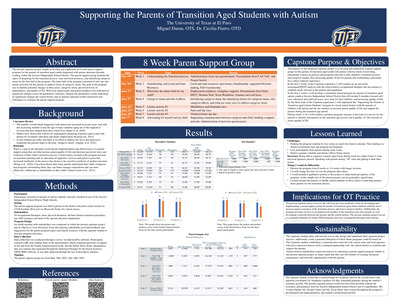
Supporting the Parents of Transition Aged Students with Autism
Miguel Duran
The present capstone project sought to develop and implement an 8-week parent support program for the parents of transition aged youths diagnosed with autism spectrum disorder residing within the Socorro Independent School District. The parent support group included the topics of preparing for the transition process, state and local resources, and identifying caregiver strain for the first half of the program. The latter half of the program consisted of self-care and leisure activities for the parents to address levels of caregiver strain. The goal of the program was to identify potential changes in three areas: caregiver strain, perceived levels of preparedness, and quality of life. Wilcoxon signed-ranks and paired sampled t-test indicated no significant changes across all quantitative measures. Despite the quantitative results indicating no significant changes the school district and its parents indicated verbal satisfaction and willingness to continue the parent support program.
-
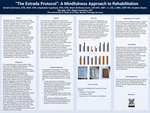
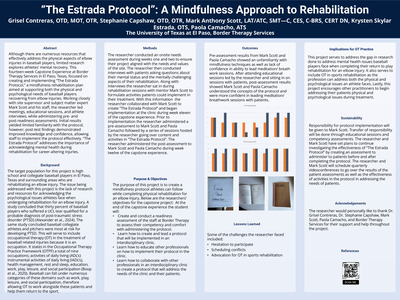
“The Estrada Protocol”: A Mindfulness Approach to Rehabilitation
Krysten Estrada
Although there are numerous resources that effectively address the physical aspects of elbow injuries in baseball players, limited research explores athletes’ mental recovery. This fourteen-week Capstone Experience at Border Therapy Services in El Paso, Texas, focused on creating and implementing “The Estrada Protocol,” a mindfulness rehabilitation plan aimed at supporting both the physical and psychological needs of baseball players recovering from elbow injuries. Working closely with site supervisor and subject matter expert Mark Scott and his staff, the researcher led meetings, educational sessions, and athlete interviews, while administering pre- and post-readiness assessments. Initial results yielded limited familiarity with the protocol, however, post-test findings demonstrated improved knowledge and confidence, allowing staff to implement the protocol effectively. “The Estrada Protocol” addresses the importance of acknowledging mental health during rehabilitation for career-altering injuries.
-
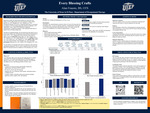
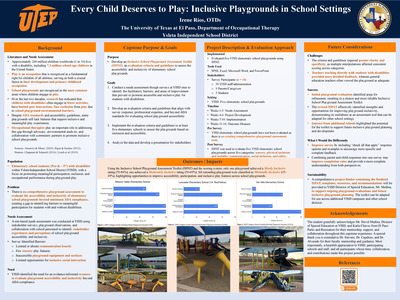
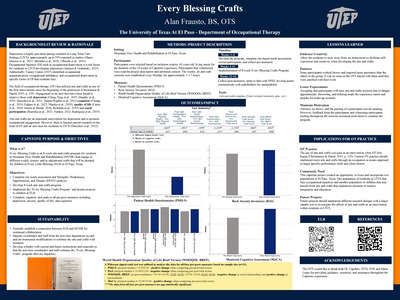
Every Blessing Crafts
Alan Frausto
Depression is highly prevalent among residents in Long-Term Care Settings (LTCS), approximately up to 50% reported in studies (Matos Quieros et al., 2021; Shrestha et al., 2020; Ulbricht et al., 2019). Occupational Injustice (OI) such as occupational deprivation is a risk factor for residents in LTCS developing depression (Janssen & Grabanski, 2023). Additionally, Causey-Upton (2015) identified occupational marginalization, occupational imbalance, and occupational deprivation as specific forms of OI that residents face.
The field of occupational therapy (OT) has utilized arts and crafts as one of the first interventions since the beginning of the profession (Christiansen & Haertl, 2019, p. 129). Engagement in art activities have been found to improve those with depression (Ching-Teng et al., 2019; Dunphy et al., 2019; Durocher et al., 2021; Vaartio-Rajalin et al., 2021),cognition (Chiang et al., 2024; Galassi et al., 2022; Masika et al., 2020), quality of life (Curtis et al., 2018; Jensen & Bonde, 2018; Richards et al., 2019) and social participation (Boersma et al., 2021; Nartker, 2022; Rodrigues et al., 2019). Arts and crafts are an intervention for depression and to promote occupational engagement. However, there is limited current research on the field of OT and art activities for residents in LTCS (Durocher et al., 2022).
Every Blessing Crafts is an 8-week arts and crafts program for residents at Mountain View Health and Rehabilitation (MVHR) that engage in weekly sensory and/or educational crafts that will be donated for children at Every Little Blessing (ELB) in El Paso, Texas.
-
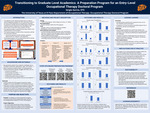
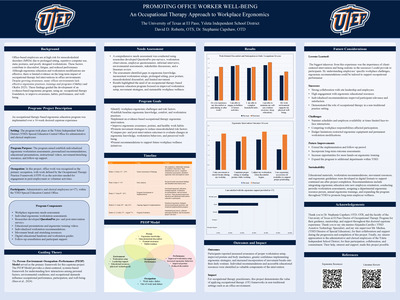
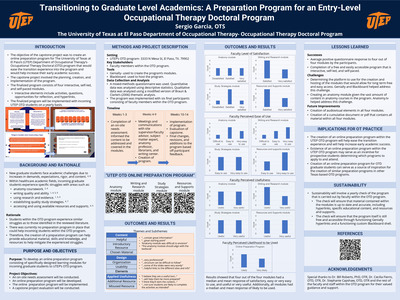
Transitioning to Graduate Level Academics: A Preparation Program for an Entry-Level Occupational Therapy Doctoral Program
Sergio Garcia
The objective of the capstone project was to create an online preparation program for The University of Texas at El Paso’s (UTEP) Department of Occupational Therapy’s-Occupational Therapy Doctoral (OTD) program that would ease the transition experience into the program and would help increase their early academic success. The capstone project involved the planning, creation, and implementation of the program. The finalized program consists of four interactive, self-led, and self-paced modules. Interactive elements include activities, questions, opportunities for reflection, and hyperlinks. The finalized program will be implemented with incoming UTEP OTD students on a yearly basis.
-
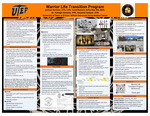
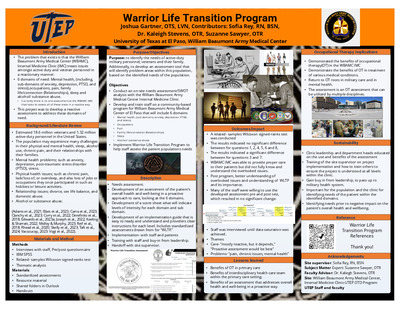
Warrior Life Transition Program
Joshua Gartner
The problem that exists is that the Willliam Beaumont Army Medical Center (WBAMC), Internal Medicine Clinic (IMC) treats issues amongst active duty and veteran personnel in a reactionary manner. 6 domains of need: Mental health, (including, sub-domains of anxiety, depression, PTSD, and stress), occupations, pain, family life/connection (Relationships), sleep and alcohol/ substance abuse. Currently there is no one assessment at the WBAMC IMC that looks to assess all of these areas in a reactive way. This project was to develop a reactive assessment to address these domains of need.
-
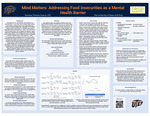
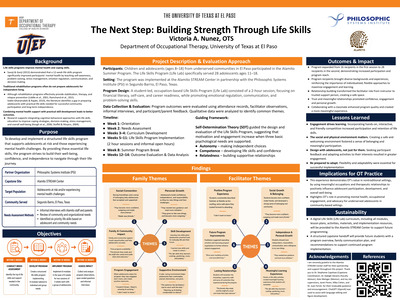
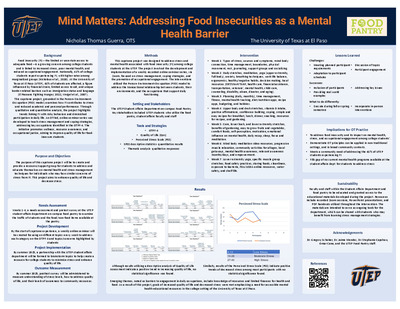
Mind Matters: Addressing Food Insecurities as a Mental Health Barrier
Nicholas Thomas Guerra
Food insecurity (FI)—the limited or uncertain access to adequate food—is a growing concern among college students and is linked to increased stress, poor mental health, and reduced occupational engagement. Nationally, 41% of college students report experiencing FI, with higher rates among marginalized groups (Nickolaus et al., 2020). At the University of Texas at El Paso (UTEP), 61% of students are affected, a figure influenced by financial strain, limited access to aid, and unique border-related barriers such as immigration status and language (El Pasoans Fighting Hunger, 2022; Weigel et al., 2007). This capstone project, grounded in the Person-Environment- Occupation (PEO) model, examines how FI contributes to stress and reduced academic and personal performance. Through qualitative and quantitative analysis, the project highlights trends linking FI with risky behaviors and diminished participation in daily life. An OT-led, online seminar series was developed to teach stress management and coping strategies, addressing key occupations identified in the OTPF-4. The initiative promotes wellness, resource awareness, and occupational justice, aiming to improve quality of life for food insecure students.
-
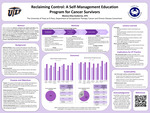
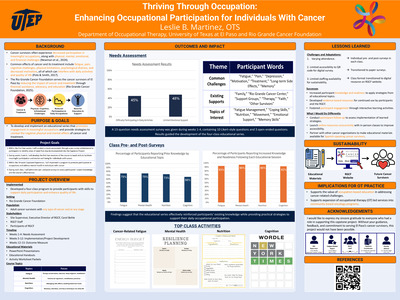
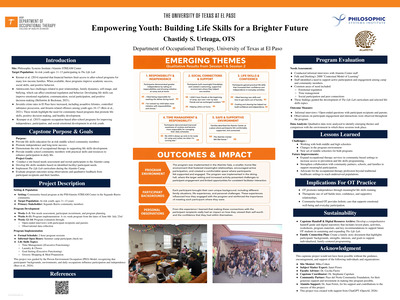
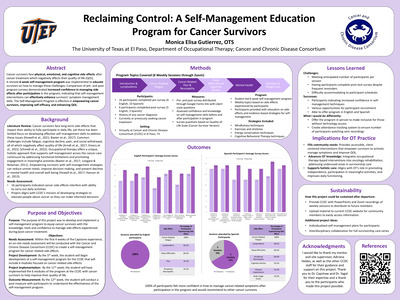
Reclaiming Control: A Self-Management Education Program for Cancer Survivors
Monica Elisa Gutierrez
Cancer survivors face physical, emotional, and cognitive side effects after cancer treatment which negatively affects their quality of life (QOL).
A remote 6-week self-management program was implemented to educate survivors on how to manage these challenges. Comparison of pre- and post-program surveys demonstrated increased confidence in managing side effects after participation in the program, indicating that self-management interventions can effectively enhance survivors’ symptom management skills. The Self-Management Program is effective in empowering cancer survivors, improving self-efficacy, and enhancing QOL.
-
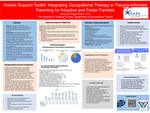
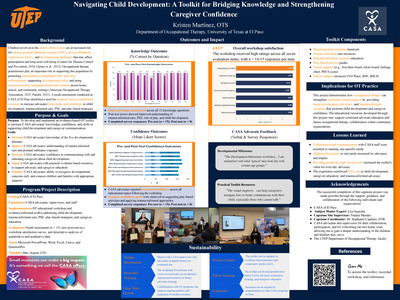
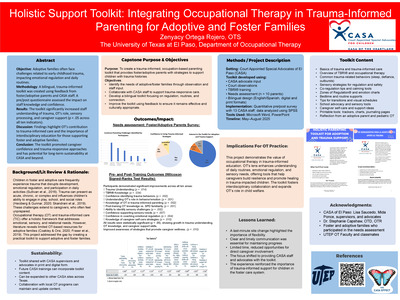
Holistic Support Toolkit: Integrating Occupational Therapy in Trauma-Informed Parenting for Adoptive and Foster Families
Zenyacy Ortega Rojero
Objective: Adoptive families often face challenges related to early childhood trauma, impacting emotional regulation and daily routines.
Methodology: A bilingual, trauma-informed toolkit was created using feedback from foster/adoptive parents and CASA staff. A pre/post questionnaire assessed the impact on staff knowledge and confidence.
Results: The toolkit significantly increased staff understanding of trauma, OT’s role, sensory processing, and caregiver support (p < .05 across all ten indicators).
Discussion: Findings highlight OT’s contribution to trauma-informed care and the importance of interdisciplinary education for those supporting foster and adoptive families.
Conclusion: The toolkit promoted caregiver confidence and trauma-responsive approaches and has potential for long-term sustainability at CASA and beyond
-
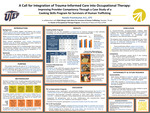
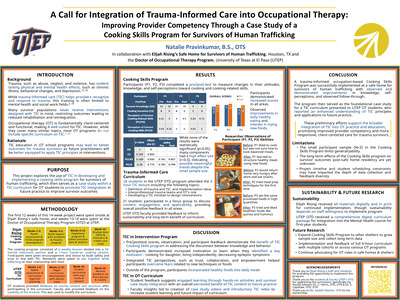
A Call for Integration of Trauma-Informed Care into Occupational Therapy: Improving Provider Competency Through a Case Study of a Cooking Skills Program for Survivors of Human Trafficking
Natalie Pravinkumar
Trauma, such as abuse, neglect, and violence, has evident lasting physical and mental health effects, such as chronic illness, behavioral changes, and depression. While trauma-informed care (TIC) helps providers recognize and respond to trauma, this training is often limited to mental health and social work fields. Many survivor populations never receive interventions designed with TIC in mind, restricting outcomes leading to reduced rehabilitation and reintegration.
Occupational therapy (OT) is fundamentally client-centered and functional, making it well suited for TIC. However, while they cover many similar topics, most OT programs do not include specific curriculum on TIC.
TIC education in OT school programs may lead to better outcomes for trauma survivors as future practitioners will be better equipped to apply TIC principles in interventions.
This project explores the use of TIC in developing and implementing a cooking skills program for survivors of human trafficking, which then serves as a case study within a TIC curriculum for OT students to promote TIC integration in future practice to improve survivor outcomes.
-
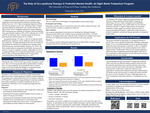
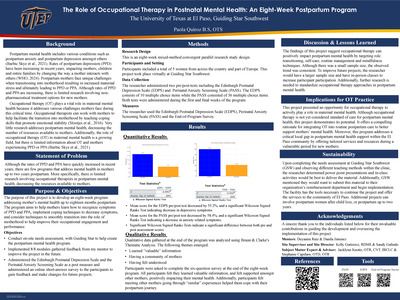
The Role of Occupational Therapy in Postnatal Mental Health: An Eight-Week Postpartum Program
Paola Quiroz
Postpartum mental health includes various conditions such as postpartum anxiety and postpartum depression amongst others (Barbic Skye et al., 2021). Rates of postpartum depression (PPD) have been increasing in recent years, impacting mothers, children and entire families by changing the way a mother interacts with others (WHO, 2024). Postpartum mothers face unique challenges when transitioning into motherhood resulting in increased maternal stress and ultimately leading to PPD or PPA. Although rates of PPD and PPA are increasing, there is limited research involving non-pharmaceutical treatment options for new mothers.
Occupational therapy (OT) plays a vital role in maternal mental health because it addresses various challenges mothers face during this critical time. Occupational therapists can work with mothers to help facilitate the transition into motherhood by teaching coping skills that promote emotional stability (Slootjes et al., 2016). Very little research addresses postpartum mental health, decreasing the number of resources available to mothers. Additionally, the role of occupational therapy (OT) in maternal mental health is a growing field, but there is limited information about OT and mothers experiencing PPD or PPA (Barbic Skye et al., 2021)
The purpose of this project is to develop an eight-week program addressing mother’s mental health up to eighteen months postpartum. The program aims to help mothers learn how to recognize symptoms of PPD and PPA, implement coping techniques to decrease symptoms, and consider techniques to smoothly transition into the role of motherhood to help improve their occupational engagement and performance.
-
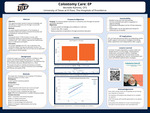
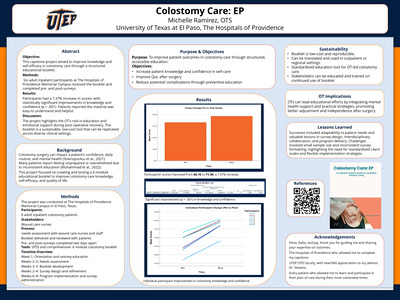
Colostomy Care: EP
Michelle Ramirez
Objective: This capstone project aimed to improve knowledge and self-efficacy in colostomy care through a structured educational booklet.
Methods: Six adult inpatient participants at The Hospitals of Providence Memorial Campus received the booklet and completed pre- and post-surveys.
Results: Participants had a 7.37% increase in scores, with statistically significant improvements in knowledge and confidence (p < .001). Patients reported the material was easy to understand and helpful.
Discussion: The project highlights the OT's role in education and emotional support during post-operative recovery. The booklet is a sustainable, low-cost tool that can be replicated across diverse clinical settings.
Printing is not supported at the primary Gallery Thumbnail page. Please first navigate to a specific Image before printing.