

-
Crocheting through Recovery
Nayeli Acosta
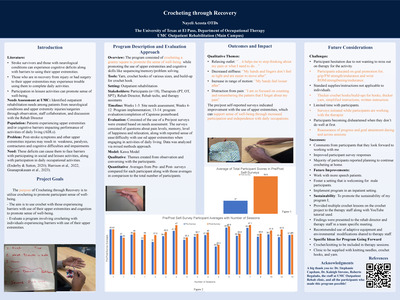
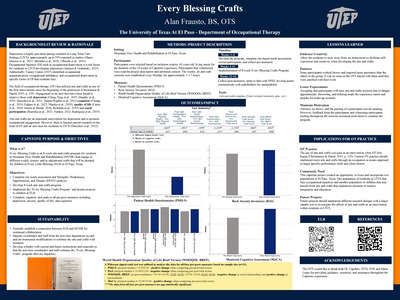
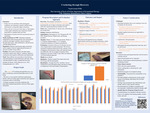
People experiencing post-stroke symptoms and other injuries affecting upper-extremity function may experience deficits such as upper-extremity weakness, paralysis, contractures, and aphasia. These deficits can create barriers to participation in social and leisure activities, as well as engagement in daily occupational activities (Enderby & Sutton, 2020; Harrison et al,. 2022; Gnanaprakasam et al., 2023). Difficulties participating in leisure and daily activities can negatively impact an individual’s overall sense of well-being.
The purpose of the program was to utilize crocheting as an intervention to promote a sense of well-being. The program consisted of crocheting a granny square to support participants’ sense of well-being while also promoting the use of upper-extremity motor skills and cognitive skills, including sequencing, memory, and problem-solving.
Program outcomes, as demonstrated through pre- and post-program surveys, indicated an overall increase in participants’ reported sense of well-being, with the average participant also demonstrating an increase. The significance and implications of this program suggest that crocheting may be an effective activity for promoting a sense of well-being while simultaneously engaging upper-extremity and cognitive skills. However, additional programs and interventions should be evaluated to further determine the effectiveness of crocheting as an occupation-based activity for promoting well-being.
-
Mind Over Matter: Navigating the Psychological Challenges in Prosthetic Adaptation
Jeff Arruiza
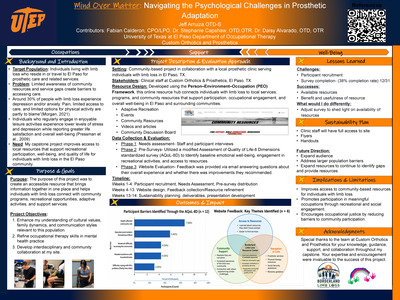
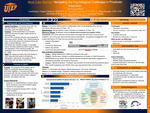
My capstone project improves access to local resources that support recreational participation, well-being, and quality of life for individuals living with limb loss in the El Paso community. Limited awareness of available resources and gaps in services can create barriers to accessing care and participating in meaningful occupations. To address these barriers, I developed an accessible, centralized resource that connects individuals with community programs, recreational opportunities, adaptive activities, and support services. By increasing access to resources and education, the project promotes meaningful occupational participation through social and recreational engagement while advancing occupational justice by reducing barriers to community participation.
-
Exploring Pediatric Sensory Processing Challenges: An Easily Accessible Online Resource for Families
Caitlyn Brockway
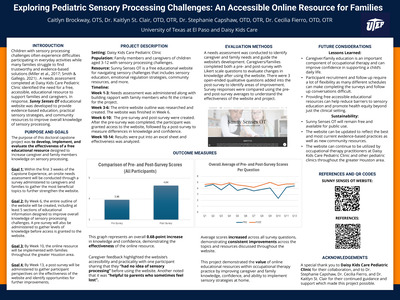
Children with sensory processing challenges often experience difficulties participating in everyday activities while many families struggle to find trustworthy and evidence-based solutions. A needs assessment completed at Daisy Kids Care Pediatric Clinic identified the need for a free, accessible, educational resource to support families and caregivers. In response, Sunny Senses OT educational website was developed to provide evidence-based education, practical sensory strategies, and community resources to improve overall knowledge of sensory processing. The website was implemented with family and caregivers at the clinic and evaluated by using a pre- and post-survey that measured levels of knowledge. Results demonstrated an increase in overall averages of the survey from a 3.96 pre-implementation to a 4.64 post-implementation of the resource. Additionally, 11 out of 12 participants demonstrated an increase in their individual scores. These findings suggest that a free and accessible resource may support caregiver knowledge and confidence in relation to sensory challenges. The project addressed a gap in the clinics population and provided a sustainable educational resource that can be used in other pediatric settings.
-
Supporting Financial Well-Being Through Habits and Routines: An Occupational Therapy Online Toolkit for College Students
Diana Cadena
Purpose: This doctoral capstone project aimed to support financial well-being among UTEP students by providing accessible, occupation-based resources to promote healthy financial habits and routines.
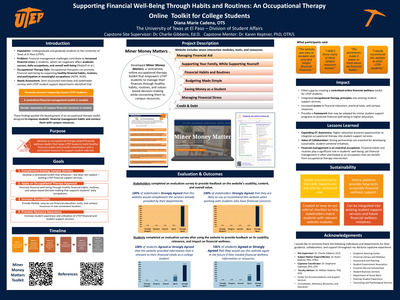
Methods: An occupational therapy-informed financial wellness toolkit, Miner Money Matters, was developed as a website for UTEP students. The website included resources related to budgeting, financial habits and routines, saving money, financial aid, credit and debt, financial stress, family financial responsibilities, and campus support services. The toolkit was disseminated through campus presentations, stakeholder engagement, organizational outreach, and SGA social media.
Results: The website received 155 visitors during implementation. Among 13 students with complete evaluation responses, 100% agreed or strongly agreed that the website was easy to navigate, easy to understand, relevant to their financial needs, and increased their confidence in locating UTEP financial resources. Additionally, 92.3% reported plans to incorporate at least one financial wellness strategy into their routine. Stakeholder feedback supported the toolkit's usability, practicality, and value of an occupational therapy approach. Implications: Findings suggest that an OT-informed financial wellness toolkit may provide a practical resource for increasing students' awareness of financial supports and encouraging healthy financial routines. Future implementation should incorporate pre/post measures and continued collaboration
-
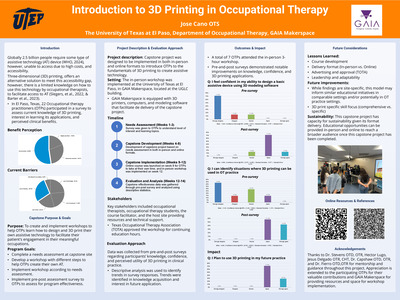
Introduction to 3D Printing in Occupational Therapy: Empowering OTs through workshops to design and 3D-print assistive technology
Jose Cano
Occupational therapy practitioners may benefit from incorporating 3D printing into practice to create individualized, low-cost, and accessible assistive technology to facilitate patients’ participation in their meaningful occupations; however, limited training and knowledge may present barriers to its use. This capstone project addressed the identified need for increased education and exposure to 3D printing and its potential applications within occupational therapy practice. The purpose of the project was to develop and implement an educational workshop designed to increase occupational therapy practitioners’ knowledge, confidence, and understanding of the 3D printing process and its application to assistive technology. The project included a needs assessment to identify practitioners’ current knowledge, experience, perceived barriers, and interest in 3D printing. Based on the identified needs, a TOTA-approved educational workshop was developed and implemented in both in-person (UTEP Makerspace) and online format. The comprehensive workshop introduced participants to 3D printing fundamentals, 3D modeling, the design-to-print workflow, printer operation, safety considerations, and resources for developing assistive technology. Pre- and post-workshop surveys were used to evaluate changes in participants’ knowledge and confidence. Results demonstrated improvements across the evaluated areas, suggesting that targeted educational opportunities may increase practitioners’ familiarity with and readiness to incorporate 3D printing into occupational therapy practice. This project highlights the potential of accessible, practice-focused education to support the integration of 3D printing as a tool for developing individualized and accessible assistive technology.
-
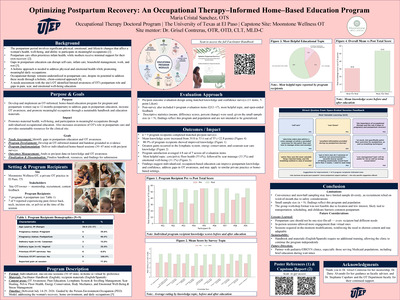
Optimizing Postpartum Recovery: An Occupational Therapy–Informed Home-Based Education Program
Maria Cristal Sanchez
Postpartum women experience significant physical, emotional, and lifestyle changes, yet care often prioritizes the infant, leaving mothers with limited recovery education. This doctoral capstone project developed and implemented an occupational therapy (OT)-informed, home-based education program for pregnant and postpartum women, in collaboration with Moonstone Wellness OT, a private occupational therapy practice in El Paso, Texas. The program, guided by the Person-Environment-Occupation model, covered OT awareness, pain education, lymphatic system and swelling management, scar healing, pelvic floor health, energy conservation, body mechanics, and emotional well-being. Sessions were individualized and one-on-one, delivered either in-home or via telehealth, and supported by a Facilitator Handbook and participant education materials in English and Spanish. Nine participants completed matched pre- and post-education surveys measuring knowledge, confidence, and awareness of OT's role in postpartum recovery. Mean knowledge scores rose from 30.8 to 53.6 out of 55, an increase of 22.8 points, and 88.9% of participants showed improvement. Program satisfaction averaged 4.8 out of 5. These results suggest that individualized, occupation-based education can improve postpartum knowledge, confidence, and participation in daily occupations. This can help mothers better care for their baby and engage in what is meaningful to them. Findings also showed increased awareness of OT's role in postpartum recovery, reflecting a broader gap in community knowledge of OT services. Expanding OT's presence in postpartum care through partnerships with pediatric and OB/GYN clinics could help close this gap. The Facilitator Handbook developed through this project offers one way to sustain the program beyond the capstone experience.
-
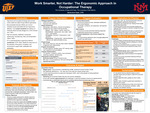
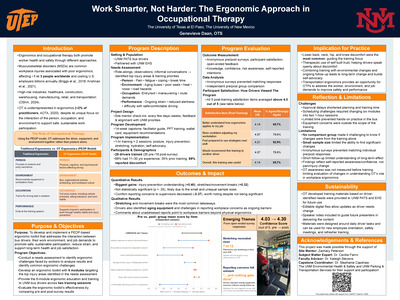
Work Smarter, Not Harder: The Ergonomic Approach in Occupational Therapy
Genevieve Daan
Bus drivers experience physical strain in areas such as the lower back, neck, hips, and knees. Long shifts, aging vehicles, and limited opportunities for movement can contribute to this discomfort. Occupational therapy (OT) is underrepresented in workplace ergonomics. However, its focus on the relationship between the person, environment, occupation, and performance provides a broader view of workplace needs. This capstone used the Person-Environment-Occupation-Performance (PEOP) model to develop an ergonomic toolkit for bus drivers.
A needs assessment was completed through ride-alongs and driver interviews. The toolkit was initially planned as six modules and later reduced to four. Two 1-hour training sessions covered posture, injury prevention, movement breaks, hydration, and self-advocacy. Twenty-eight drivers participated. Anonymous pre- and post-training surveys measured knowledge, confidence, and intended use of the strategies.
Knowledge and confidence increased from 4.03 to 4.30 out of 5, though this change was not statistically significant, likely due to the small sample size. The largest improvements were in injury prevention and stretching knowledge. Training satisfaction was also high, with all items averaging above 4.0 out of 5. However, drivers reported less comfort bringing concerns to supervisors after training. This finding was also reflected in driver feedback and suggests that individual-level training cannot fully address discomfort when organizational-level barriers limit drivers' ability to report concerns. The project showed how an OT approach can identify both individual strategies and workplace factors that affect occupational performance.
-
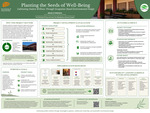
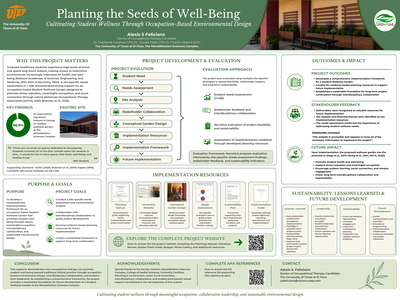
Planting the Seeds of Well-Being: Cultivating Student Wellness Through Occupation-Based Environmental Design
Alexis Selena Feliciano
The Rehabilitation Sciences Complex (RSC) at The University of Texas at El Paso provides limited opportunities for students to access outdoor wellness spaces despite the high academic demands experienced by Occupational Therapy and Doctor of Physical Therapy students. A needs assessment of 128 students identified strong interest in a Student Wellness Garden to support stress management, relaxation, studying, and meaningful engagement with nature. The purpose of this doctoral capstone project was to develop an occupation-based Student Wellness Garden while creating the resources needed to support its future implementation. Although the garden was not physically installed during the capstone experience due to university approval processes and funding timelines, the project evolved into a comprehensive implementation package. Deliverables included a Planning Manual, Sustainability Plan, Master Plant Guide, project website, implementation report, conceptual garden designs, educational materials, and implementation resources. Through collaboration with university leadership, Facilities, Planning & Construction, the Green Fund, and other campus stakeholders, the project established a strong foundation for future implementation. This capstone demonstrates how occupational therapy can promote student well-being through occupation-based environmental design while supporting systems-level practice, interdisciplinary collaboration, and sustainable change within higher education.
-
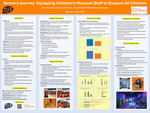
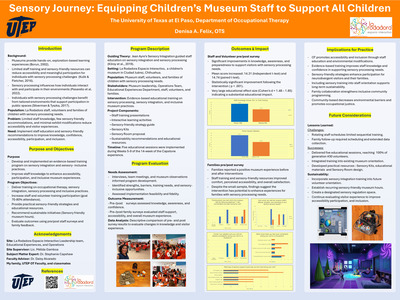
Sensory Journey: Equipping Children’s Museum Staff to Support All Children
Denisa A. Felix
Museums ensure access to important opportunities for learning, exploration, and community participation; nevertheless, limited staff training and sensory-friendly resources may generate limitations for children and families with sensory processing needs. A needs assessment at La Rodadora Espacio Interactivo in Ciudad Juárez, Chihuahua, highlithed limited staff knowledge of sensory processing and sensory integration, lack of formal sensory-related protocols, and limited sensory accommodations. The purpose of this Capstone project was to improve museum staff and volunteer knowledge, awareness, confidence, and preparedness to support visitors with sensory processing needs and foster inclusive museum experiences. An evidence-based educational intervention was developed based on occupational therapy and sensory integration principles. Due to cycling staff and volunteer schedules, original training modules were merged into one comprehensive presentation addressing sensory processing, sensory integration, signs of dysregulation, communication strategies, and practical sensory-friendly accommodations. Created two sensory kits for visitors to use and a proposal for a sensory room for the museum. Five presentations were conducted to 84 staff and volunteers. Pre- and post-training surveys were used to measure changes in knowledge and preparedness. Among 35 matched responses, scores meaningfully improved after the intervention, with a large effect size (Cohen’s d = 1.85). Family survey responses also identified overcrowding, noise, and limited sensory accommodations as barriers and agreed on the need for sensory-friendly hours, self-regulation tools, and visual resources. Findings corroborate the viability and benefit of embedding sensory training into museum staff education to promote accessibility, inclusion, and meaningful participation for visitors with sensory processing needs.
-
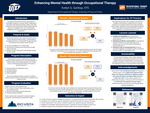
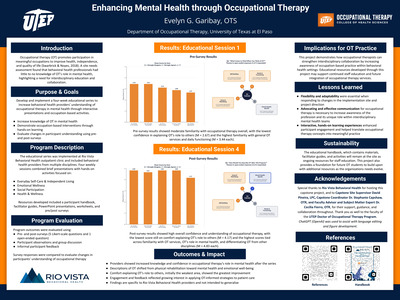
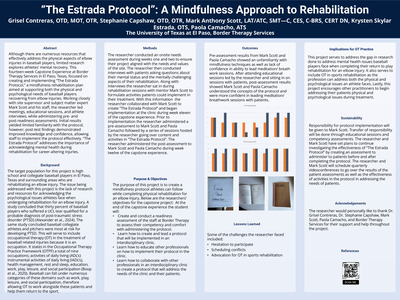
Enhancing Mental Health Through Occupational Therapy
Evelyn G. Garibay
Behavioral health providers may have limited knowledge of occupational therapy and its role in supporting individuals with mental health conditions, which can limit opportunities for interdisciplinary collaboration and the use of occupation-based approaches in practice. This capstone project aimed to increase behavioral health providers’ awareness and understanding of occupational therapy in mental health through an interactive educational program. Following a site needs assessment, an educational series was developed that combined presentations with hands-on, occupation-based activities focused on areas including daily functioning, emotional regulation, social participation, and health and wellness. Implementation also included the development of a comprehensive participant handbook containing facilitator guides, intervention ideas, patient education handouts, and supplemental resources that providers can continue to use in practice. Pre- and post-surveys were used to evaluate changes in participants’ understanding and confidence related to occupational therapy. Survey findings demonstrated an overall positive change in participants’ understanding of occupational therapy following the educational series. This project provides a sustainable educational resource that can support continued staff education, promote interdisciplinary collaboration, and increase awareness of the role of occupational therapy within behavioral health settings.
-
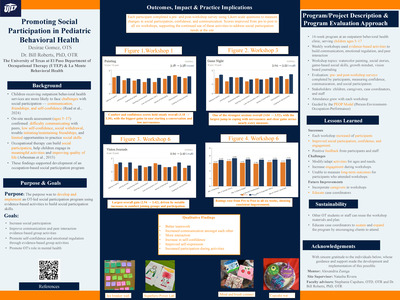
Promoting Social Participation in Pediatric Behavioral Health
Desirae Gomez
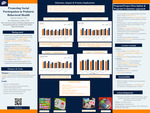
Children receiving behavioral health services may experience challenges with social participation, including difficulty communicating, forming friendships, and engaging with peers. A needs assessment identified a need for more opportunities to develop social skills and support emotional well-being within an outpatient behavioral health setting. The purpose of this capstone project was to develop and implement an occupational therapy-driven social participation program that promoted social engagement, coping skills, emotional expression, and interpersonal skills among children receiving behavioral health services. Weekly group workshops were implemented using evidence-informed, occupation-based activities, such as art and emotional expression, social stories, board games, and collaborative activities. Pre- and post-workshop surveys were used to evaluate changes in participants’ perceived confidence and comfort with social participation. Program participation increased throughout implementation, beginning with four participants and reaching 38 participants. Overall, pre- and post-program findings showed increased reported social participation, with the average score increasing from 3.05 to 3.46. Findings support the potential role of occupational therapy in addressing social participation within behavioral health settings. Integrating structured, meaningful group activities may provide children with opportunities to practice social skills, build confidence, and engage more independently in meaningful occupations.
-
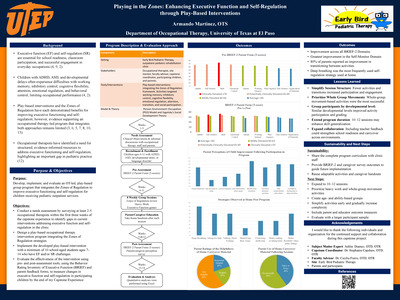
Playing in the Zones: Enhancing Executive Function and Self-Regulation through Play-Based Interventions
Armando Martinez
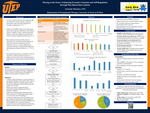
Executive function (EF) and self-regulation (SR) are essential skills that support children’s participation in school, play, and everyday occupations. Children with attention-deficit/hyperactivity disorder (ADHD), autism spectrum disorder (ASD), and developmental delays may experience difficulties with working memory, inhibitory control, cognitive flexibility, and emotional regulation. A need was identified for a structured, evidence-informed therapy resource addressing EF and SR within pediatric practice. The purpose of the project was to develop, implement, and evaluate a group program integrating the Zones of Regulation to support EF and SR in children. The program was implemented at an outpatient pediatric clinic with children ages 6-11 and consisted of 8 weekly group sessions incorporating the Zones of Regulation concepts, heavy work activities, executive function games, and caregiver educational handouts. Program outcomes were evaluated using pre-and post- intervention BRIEF-2 Parent Forms and a post-program parent/caregiver perception survey. Participants demonstrated improvements across all measured BRIEF-2 domains, with the greatest improvement observed in the self-monitor domain. Additionally, 80% of parents reported improvement in their child’s ability to identify emotions, and deep breathing was the most frequently observed self-regulation strategy used at home. Findings support the potential value of integrating structured play, self-regulation strategies, and caregiver education to promote executive function and self-regulation.
-
Navigating Child Development: A Toolkit for Bridging Knowledge and Strengthening Caregiver Confidence
Kristen Sarai Martinez
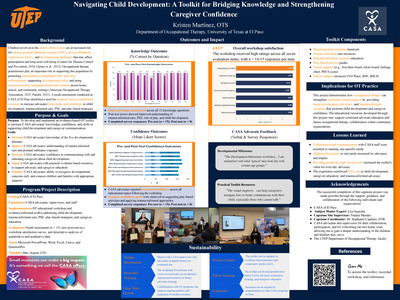
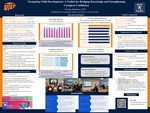
Children involved in the child welfare system are at increased risk for trauma, prenatal substance exposure (PSE), adverse childhood experiences, and developmental challenges that may affect participation and well-being. A needs assessment conducted at CASA of El Paso identified a need for practical resources to strengthen advocates’ knowledge and confidence related to child development, trauma-informed care, PSE, play-based strategies, and communication with caregivers. The purpose of this doctoral capstone project was to develop and implement an evidence-based occupational therapy toolkit and educational workshop to increase CASA advocates’ knowledge, confidence, and skills in supporting children and families. The project included a comprehensive toolkit with developmental milestone guides, play-based activities, visual supports, co-regulation strategies, trauma-informed communication strategies, PSE education, and school support resources. A workshop was implemented to provide advocates with education and opportunities to apply these strategies. Pre- and post-test findings demonstrated increased knowledge and confidence following the educational intervention, with notable confidence gains in suggesting play-based activities and applying trauma-informed approaches. Workshop feedback also indicated that participants found the education and resources relevant and useful. Findings support the value of incorporating occupational therapy-informed education and practical resources into child welfare advocacy to strengthen advocates’ ability to recognize developmental concerns, support caregivers, and promote children’s participation and well-being.
-
Thriving Through Occupation: Enhancing Occupational Participation for Cancer Survivors
Leslie B. Martinez
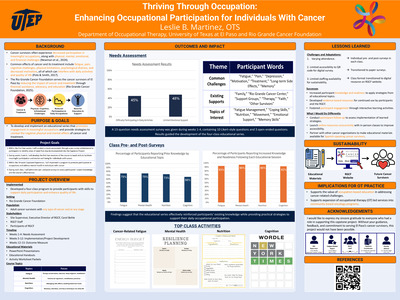
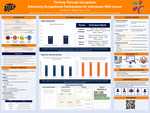
Cancer survivors often experience decreased participation in meaningful occupations, along with physical, mental, emotional, and financial challenges (Newman et al., 2024). This capstone project developed an educational series to promote engagement in meaningful occupations and provide strategies to combat the negative physical and mental effects of cancer and treatment. Four classes covering various health topics, including cancer-related fatigue, cognitive impairment, mental health, and nutrition, were implemented for cancer survivors at the Rio Grande Cancer Foundation. The classes included an educational portion in which participants were introduced to each topic, followed by interactive learning activities designed to promote the application and transfer of skills. Findings suggest that the educational series reinforced participants' existing knowledge and provided practical strategies to support their daily occupational participation. These findings highlight the potential of occupation-based education to support cancer survivors in managing challenges and maintaining engagement in meaningful occupations. It also supports the expansion of occupational therapy-led services into community-based oncology programs.
-
Beyond the Game: An Occupational Therapy Approach to Adaptive Sports
Leslie Nicole Martinez
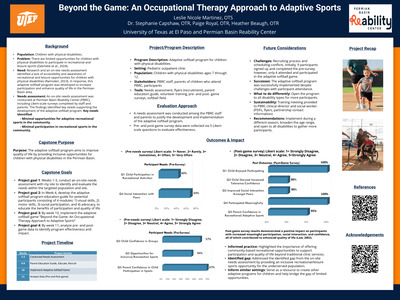
Children with physical disabilities often experience limited opportunities to participate in meaningful recreational and leisure activities, which may hinder overall quality of life. A needs assessment conducted with staff and parents at Permian Basin Reability Center (PBRC) identified a gap in accessible recreational opportunities for children with physical disabilities, justifying the need for an adaptive softball program. The purpose of this capstone project was to develop and implement an adaptive softball program that promoted participation, inclusion, personal skills development, and enhanced quality of life by integrating occupational therapy in adaptive sports.
The adaptive softball program included a parent/guardian education guide and a one-day adaptive softball game for children ages 7-12 with physical disabilities. A total of four children participated in the final game. Participants were supported through a buddy system to encourage participation. Pre and post-game surveys indicated a positive impact on social interaction, confidence, and participation, which are important contributors to enhancing overall quality of life.
The project demonstrated the potential for adaptive sports to provide meaningful recreational opportunities for children with physical disabilities. Findings support the role of occupational therapy in promoting opportunities and participation beyond traditional clinical settings. This program can serve as a resource for other settings to develop future adaptive recreational programs and to enhance the overall quality of life for those participating.
-
Occupation, Purpose, and Possibility: A Holistic Program for Children Battling Cancer
Ayleen Mena
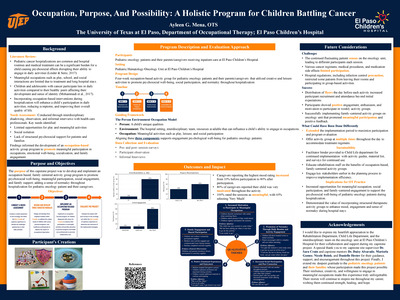
Pediatric oncology patients often experience disruptions in meaningful occupations due to prolonged hospitalization, medical treatments, fatigue, isolation precautions, and emotional distress. A needs assessment conducted within a pediatric oncology unit identified concerns related to social isolation, limited opportunities for meaningful activity, emotional well-being, and disruptions in play, leisure, social participation, and daily routines. The purpose of this capstone project was to develop and implement an occupation-based, family-centered activity program to support the psychosocial well-being and meaningful participation of pediatric oncology patients during hospitalization.
-
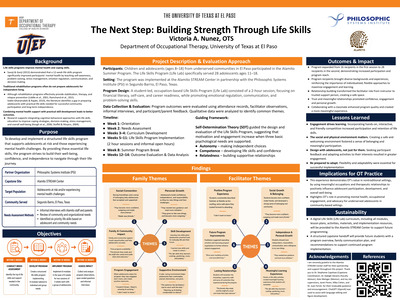
The Next Step: Building Strength Through Life Skills
Victoria Nunez
Adolescents who are at risk or facing mental health challenges often miss out on chances to build the practical life skills they need for everyday life and a smooth transition into adulthood. While traditional rehabilitation programs tend to focus on stabilization and therapy, they frequently fall short when it comes to preparing young people for independent living. The purpose of this doctoral capstone project was to develop and implement a structured, occupation-based life skills program to promote well-being, independence, and meaningful participation among adolescents. The Life Skills Program (Life Lab) took place at the Alamito STREAM Center in Segundo Barrio, El Paso, Texas, and reached 28 participants between the ages of 11 and 18. The program covered topics like financial literacy, self-care and wellness, and career readiness, while also incorporating skills such as emotional regulation, communication, and problem-solving. Program outcomes were measured using attendance records, facilitator observations, informal interviews, and participant/parent feedback. Findings demonstrated increased participation, social connections, and independence, while meaningful relationships developed throughout the program. Hands-on activities and a supportive environment contributed to the participants' learning and engagement. The project highlights the value of occupational therapy in nontraditional community-based settings, while demonstrating that life skills interventions and therapeutic relationships can support adolescent mental health, engagement, and overall well-being.
-
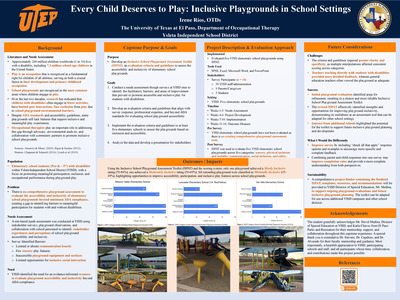
Every Child Deserves to Play: Inclusive Playgrounds in School Settings
Irene Rios
Children with disabilities experience barriers that limit meaningful participation and social interaction during school playground play. Despite ADA standards, many playgrounds lack inclusive features that support participation for students of all abilities. YISD identified the need for a comprehensive resource to evaluate playground Accessiblity and inclusivity beyond ADA compliance.
Project Purpose: Develop an Inclusive School Playground Assessment Toolkit (ISPAT), an evaluation criteria and guidelines to assess the Accessiblity and inclusivity of elementary school playgrounds.
Implementation: Evaluate five YISD school playgrounds using ISPAT
Outcomes: Using IPSAT and its scoring system, only one playground achieved a Mostly Inclusive rating (70-85%), one achieved a Moderately Inclusive rating (50-69%). All remaining playgrounds were classified as Minimally Inclusive (25-49%), highlighting opportunities to improve accessibility, participation, and inclusive play features across school playgrounds.
Significance: ISPAT effectively identified the strengths and opportunities for improving playground inclusivity, demonstrating its usefulness as an assessment tool that can be adapted for other school settings. Occupational therapist play an improtant role in addressing this gap through advocacy, environmental analysis, and collaboration with community partners to promote inclusive playgrounds.
-
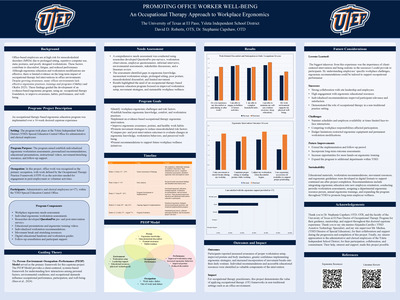
Promoting Office Worker Well-Being- An Occupational Therapy Approach to Workplace Ergonomics
David D. Roberts
Office-based employees face an increased risk of musculoskeletal disorders (MSDs) due to prolonged sitting, repetitive computer use, static postures, and poorly designed workstations. These risk factors contribute to discomfort, fatigue, and diminished work performance. While ergonomic education and workstation modifications have proven effective, evidence on the long-term impact of occupational therapy-led interventions in office settings remains limited. In response, an evidence-based ergonomic program was developed using an occupational therapy framework to enhance awareness, habits, performance, and overall well-being. The program included individualized ergonomic workstation assessments, tailored recommendations, educational presentations, instructional videos, movement and stretching resources, and ongoing follow-up support. Administrative and clerical employees (n=17) from the YISD Special Education Central Office participated in the program. Office work was identified as the primary occupation, defined by the Occupational Therapy Practice Framework (OTPF-4) as activities required for engagement in paid employment or volunteer roles. The Person–Environment–Occupation–Performance (PEOP) Model provided the theoretical foundation for this capstone project. A comprehensive needs assessment was conducted through researcher-developed QuestionPro pre-surveys, workstation observations, employee questionnaires, informal interviews, environmental assessments, stakeholder discussions, and a literature review. The assessment revealed gaps in ergonomic knowledge, inconsistent workstation configurations, prolonged sitting, poor posture, musculoskeletal discomfort, and limited movement. Following the intervention, participants reported reduced work-related discomfort, increased awareness of workstation setup, improved posture, and more frequent movement breaks in their daily routines. This project highlights the value of applying occupational therapy (OT) frameworks in non-traditional environments such as office settings.
-
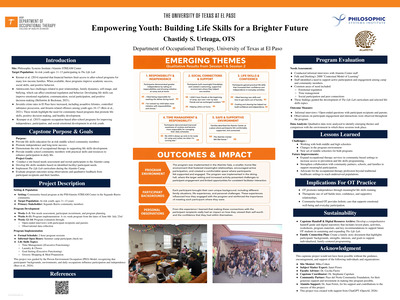
Empowering Youth: Building Life Skills for a Brighter Future
Chastidy S. Urteaga
At-risk youth experience many barriers that may impact their participation in daily life activities, development in life skills, and opportunities for them to create positive social connections. This doctoral capstone project explored the role of occupational therapy within a community- based setting and the development and implementation at the Philosophic Systems Institute/ Alamito STREAM Center in El Paso, Texas. The program's purpose was to provide at-risk middle school youth with practical life skills that can help promote independence and lifelong success in everyday life.
This project was guided by the Person Environment Occupation (PEO) Model. This six-week life skills program covered topics such as time management, laundry and chores, goal setting, grocery shopping, and meal preparation. As for program outcomes, they were evaluated through observation, open-ended questions, and informal interviews with participants and their parents.
These qualitative findings emerged with five themes related to responsibilities and independence, social connections and support, life skills and confidence, time management and responsibilities, and a safe and supportive environment. These experiences demonstrate that a supportive environment encourages stronger engagement and relationship building. Overall, this capstone project demonstrates the value of occupational therapy in a community-based setting and the importance of therapeutic use of self, meaningful relationships, and life skills training in supporting at-risk youth.
-
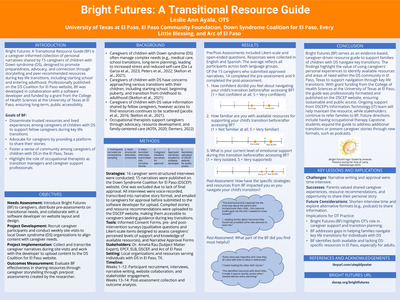
Bright Futures: A Transitional Resource Guide
Leslie Ayala
Bright Futures: A Transitional Resource Guide (BF) is a caregiver-informed collection of personal narratives shared by 15 caregivers of children with Down syndrome (DS), designed to promote preparedness, advocacy, and connection through storytelling and peer-recommended resources during key life transitions, including starting school and entering adulthood. Professionally published on the DS Coalition for El Paso website, BF was developed in collaboration with a software developer and funded by a grant from the College of Health Sciences at the University of Texas at El Paso, ensuring long-term, public accessibility.
Goals of BF:
- Disseminate trusted resources and lived experiences among caregivers of children with DS to support fellow caregivers during key life transitions
- Advocate for caregivers by providing a platform to share their stories
- Foster a sense of community among caregivers of children with DS in the El Paso, Texas
- Highlight the role of occupational therapists as transition managers and caregiver support professionals
-
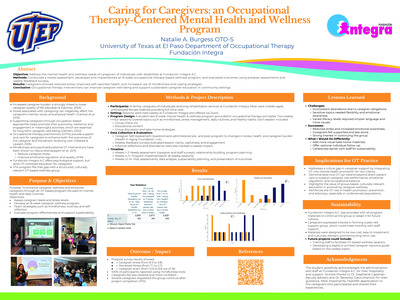
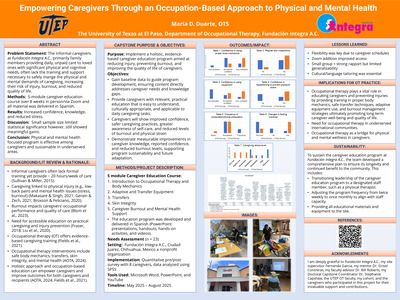
Caring for Caregivers: an Occupational Therapy-Centered Mental Health and Wellness Program
Natalie Burgess
Objective: Address the mental health and wellness needs of caregivers of individuals with disabilities at Fundación Integra A.C.
Methods: Conducted a needs assessment, developed and implemented an 8-week occupational therapy-based wellness program, and evaluated outcomes using pre/post assessments and weekly feedback surveys.
Results: Caregivers showed reduced stress, improved self-reported health, and increased use of mindfulness and coping strategies.
Conclusion: Occupational therapy interventions can improve caregiver well-being and support sustainable caregiver education in community settings.
-
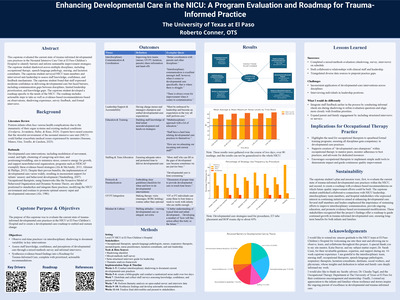
Enhancing Developmental Care in the NICU: A Program Evaluation and Roadmap for Trauma- Informed Practice
Roberto Conner
This capstone evaluated the current state of trauma-informed developmental care practices in the Neonatal Intensive Care Unit at El Paso Children’s Hospital to identify barriers and inform sustainable improvement strategies. The capstone student shadowed across multiple disciplines, including occupational therapy, speech-language pathology, nursing, and lactation consultants. The capstone student surveyed NICU team members and interviewed unit leadership to assess staff knowledge, confidence, and feedback mechanisms. The capstone student found that staff expressed moderate confidence in delivering developmental care but faced barriers, including communication gaps between disciplines, limited leadership prioritization, and knowledge gaps. The capstone student developed a roadmap specific to the needs of the NICU. The roadmap includes actionable steps to take as well as evidence-based recommendations based on observations, shadowing experience, survey feedback, and formal interviews.
-
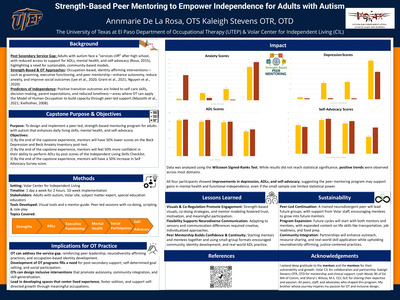
Strength-Based Peer Mentoring to Empower Independence for Adults with Autism
Annmarie De La Rosa
Adults with autism face disproportionately high rates of unemployment or underemployment, limited engagement in post-secondary education, and restricted opportunities for social participation. This is largely due to the abrupt discontinuation of services after high school—often referred to as the “service cliff” (Roux, 2015). The loss of structured supports can result in a decline in functional independence, increased mental health concerns such as anxiety and depression, and heightened social isolation (Chun et al., 2023; Schiltz et al., 2021).
This Capstone project aimed to address the unmet post-secondary needs of young adults with autism by implementing a peer mentoring program grounded in a strength-based occupational therapy approach. The project targeted improvements in independence with activities of daily living (ADLs), reduction in mental health symptoms, and increased social participation—ultimately supporting a higher quality of life. (Chun et al., 2023; Schiltz et al., 2021).
-
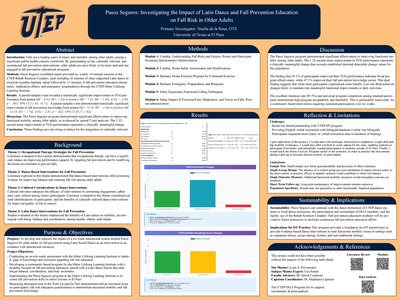
Pasos Seguros: Investigating the Impact of Latin Dance and Fall Prevention Education on Fall Risk in Older Adults
Noelia de la Rosa
Introduction: Falls are a leading cause of injury and mortality among older adults, posing a significant public health concern worldwide. By participating in fun, culturally relevant, and recreational fall prevention interventions, older adults are more likely to be motivated and stay engaged in fall prevention educational programs.
Methods: Pasos Seguros (confident steps) provided six weekly 60-minute sessions at the UTEP Rehab Sciences Complex, each including 45 minutes of chair-supported Latin dance instruction (cumbia, bachata, salsa) followed by 15 minutes of fall prevention education (home safety, medication effects, and emergency preparedness) through the UTEP Osher Lifelong Learning Institute.
Results: A paired-samples t-test revealed a statistically significant improvement in TUG performance from pretest (M = 8.64, SD= 1.52) to posttest (M = 7.32, SD = 1.56), t(16) = -4.60, p < .001, 95% CI [-1.93, -0.71]. A paired-samples t-test demonstrated statistically significant improvement in fall prevention knowledge from pretest (M= 13.18, SD = 2.46) to posttest (M = 14.18, SD = 1.74), t(16) = 2.55, p = .022, 95% CI [0.17, 1.83].
Discussion: The Pasos Seguros program demonstrated significant effectiveness in improving functional mobility among older adults, as evidenced by paired T-test analyses. The 1.32-second mean improvement in TUG performance represents a clinically meaningful change.
Conclusion: These findings provide strong evidence for the integration of culturally-relevant physical activity interventions with structured fall prevention education as an effective approach to improving functional mobility in older adults.
Printing is not supported at the primary Gallery Thumbnail page. Please first navigate to a specific Image before printing.