


-
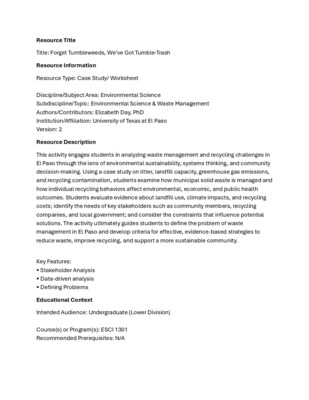
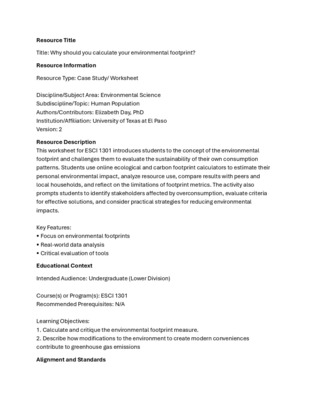
Forget Tumbleweeds, We’ve Got Tumble-Trash
Elizabeth L. Day
This activity engages students in analyzing waste management and recycling challenges in El Paso through the lens of environmental sustainability, systems thinking, and community decision-making. Using a case study on litter, landfill capacity, greenhouse gas emissions, and recycling contamination, students examine how municipal solid waste is managed and how individual recycling behaviors affect environmental, economic, and public health outcomes. Students evaluate evidence about landfill use, climate impacts, and recycling costs; identify the needs of key stakeholders such as community members, recycling companies, and local government; and consider the constraints that influence potential solutions. The activity ultimately guides students to define the problem of waste management in El Paso and develop criteria for effective, evidence-based strategies to reduce waste, improve recycling, and support a more sustainable community.
-
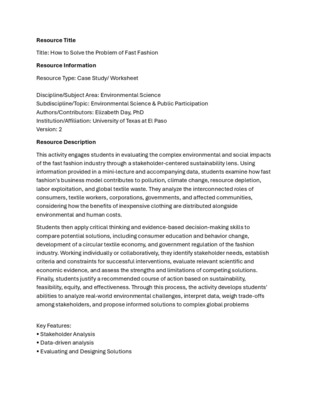
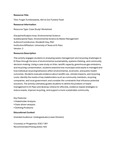
How to Solve the Problem of Fast Fashion
Elizabeth L. Day
This activity engages students in evaluating the complex environmental and social impacts of the fast fashion industry through a stakeholder-centered sustainability lens. Using information provided in a mini-lecture and accompanying data, students examine how fast fashion's business model contributes to pollution, climate change, resource depletion, labor exploitation, and global textile waste. They analyze the interconnected roles of consumers, textile workers, corporations, governments, and affected communities, considering how the benefits of inexpensive clothing are distributed alongside environmental and human costs.
Students then apply critical thinking and evidence-based decision-making skills to compare potential solutions, including consumer education and behavior change, development of a circular textile economy, and government regulation of the fashion industry. Working individually or collaboratively, they identify stakeholder needs, establish criteria and constraints for successful interventions, evaluate relevant scientific and economic evidence, and assess the strengths and limitations of competing solutions. Finally, students justify a recommended course of action based on sustainability, feasibility, equity, and effectiveness. Through this process, the activity develops students' abilities to analyze real-world environmental challenges, interpret data, weigh trade-offs among stakeholders, and propose informed solutions to complex global problems.
-

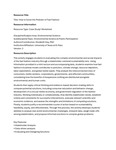
Sustainability: UN Sustainable Development Goals
Marguerite Mauritz
The UN Sustainable Development Goals (UNSDGs) are a framework for identifying elements of environment, society, economy, and governance to guide a more sustainable trajectory. The UNSDG priorities are clear, but the scope is broad and invites opportunity to grapple with the complexity of true sustainable development. In this activity, students will work in small groups to identify needs in their community, prioritize, and connect needs to specific UNSDGs. Students will then evaluate trade-offs and synergies between their goals and brainstorm community actions to achieve and track progress for their goals. Students can prepare for this discussion with pre-class reading, an assignment to examine one UNSDG in depth, and a brief introduction at the start of class. Students end with a reflection on their group discussions.
This resource includes a worksheet, teacher guide, and slide deck.
-
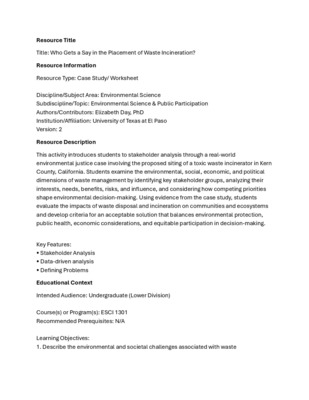
Who Gets a Say in the Placement of Waste Incineration?
Elizabeth L. Day
This activity introduces students to stakeholder analysis through a real-world environmental justice case involving the proposed siting of a toxic waste incinerator in Kern County, California. Students examine the environmental, social, economic, and political dimensions of waste management by identifying key stakeholder groups, analyzing their interests, needs, benefits, risks, and influence, and considering how competing priorities shape environmental decision-making. Using evidence from the case study, students evaluate the impacts of waste disposal and incineration on communities and ecosystems and develop criteria for an acceptable solution that balances environmental protection, public health, economic considerations, and equitable participation in decision-making.
-
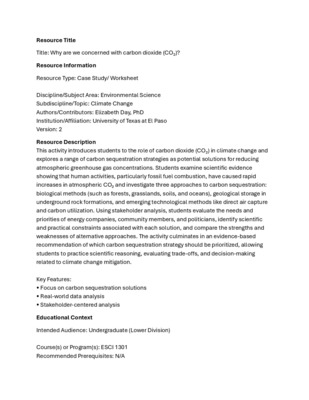
Why are we concerned with carbon dioxide (CO₂)?
Elizabeth L. Day
This activity introduces students to the role of carbon dioxide (CO₂) in climate change and explores a range of carbon sequestration strategies as potential solutions for reducing atmospheric greenhouse gas concentrations. Students examine scientific evidence showing that human activities, particularly fossil fuel combustion, have caused rapid increases in atmospheric CO₂ and investigate three approaches to carbon sequestration: biological methods (such as forests, grasslands, soils, and oceans), geological storage in underground rock formations, and emerging technological methods like direct air capture and carbon utilization. Using stakeholder analysis, students evaluate the needs and priorities of energy companies, community members, and politicians, identify scientific and practical constraints associated with each solution, and compare the strengths and weaknesses of alternative approaches. The activity culminates in an evidence-based recommendation of which carbon sequestration strategy should be prioritized, allowing students to practice scientific reasoning, evaluating trade-offs, and decision-making related to climate change mitigation.
-
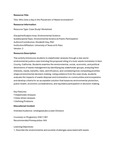
Why Should You Calculate Your Environmental Footprint?
Elizabeth L. Day
This worksheet for ESCI 1301 introduces students to the concept of the environmental footprint and challenges them to evaluate the sustainability of their own consumption patterns. Students use online ecological and carbon footprint calculators to estimate their personal environmental impact, analyze resource use, compare results with peers and local households, and reflect on the limitations of footprint metrics. The activity also prompts students to identify stakeholders affected by overconsumption, evaluate criteria for effective solutions, and consider practical strategies for reducing environmental impacts.
OER created or significantly modified by UTEP faculty and instructors for use in Engineering courses that can't otherwise be classified as a "textbook" (lecture slides, activities, projects, syllabi, reading lists, assignments, recorded lectures, quizzes, instructional videos, etc.)
Printing is not supported at the primary Gallery Thumbnail page. Please first navigate to a specific Image before printing.