

Files
Download Full Text (1.2 MB)
Description
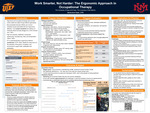
Bus drivers experience physical strain in areas such as the lower back, neck, hips, and knees. Long shifts, aging vehicles, and limited opportunities for movement can contribute to this discomfort. Occupational therapy (OT) is underrepresented in workplace ergonomics. However, its focus on the relationship between the person, environment, occupation, and performance provides a broader view of workplace needs. This capstone used the Person-Environment-Occupation-Performance (PEOP) model to develop an ergonomic toolkit for bus drivers.
A needs assessment was completed through ride-alongs and driver interviews. The toolkit was initially planned as six modules and later reduced to four. Two 1-hour training sessions covered posture, injury prevention, movement breaks, hydration, and self-advocacy. Twenty-eight drivers participated. Anonymous pre- and post-training surveys measured knowledge, confidence, and intended use of the strategies.
Knowledge and confidence increased from 4.03 to 4.30 out of 5, though this change was not statistically significant, likely due to the small sample size. The largest improvements were in injury prevention and stretching knowledge. Training satisfaction was also high, with all items averaging above 4.0 out of 5. However, drivers reported less comfort bringing concerns to supervisors after training. This finding was also reflected in driver feedback and suggests that individual-level training cannot fully address discomfort when organizational-level barriers limit drivers' ability to report concerns. The project showed how an OT approach can identify both individual strategies and workplace factors that affect occupational performance.
Publication Date
2026
Keywords
occupational therapy, workplace ergonomics, PEOP model, bus drivers, injury prevention
Disciplines
Occupational Therapy
Recommended Citation
Daan, Genevieve, "Work Smarter, Not Harder: The Ergonomic Approach in Occupational Therapy" (2026). OT Doctoral Capstones. 22.
https://scholarworks.utep.edu/otcapstones/22
Comments
Faculty Mentor: Dr. Stevens
Capstone Site: University of New Mexico (Environmental Health & Safety Department)